
How CBT reduces pain amplification and the stress response.
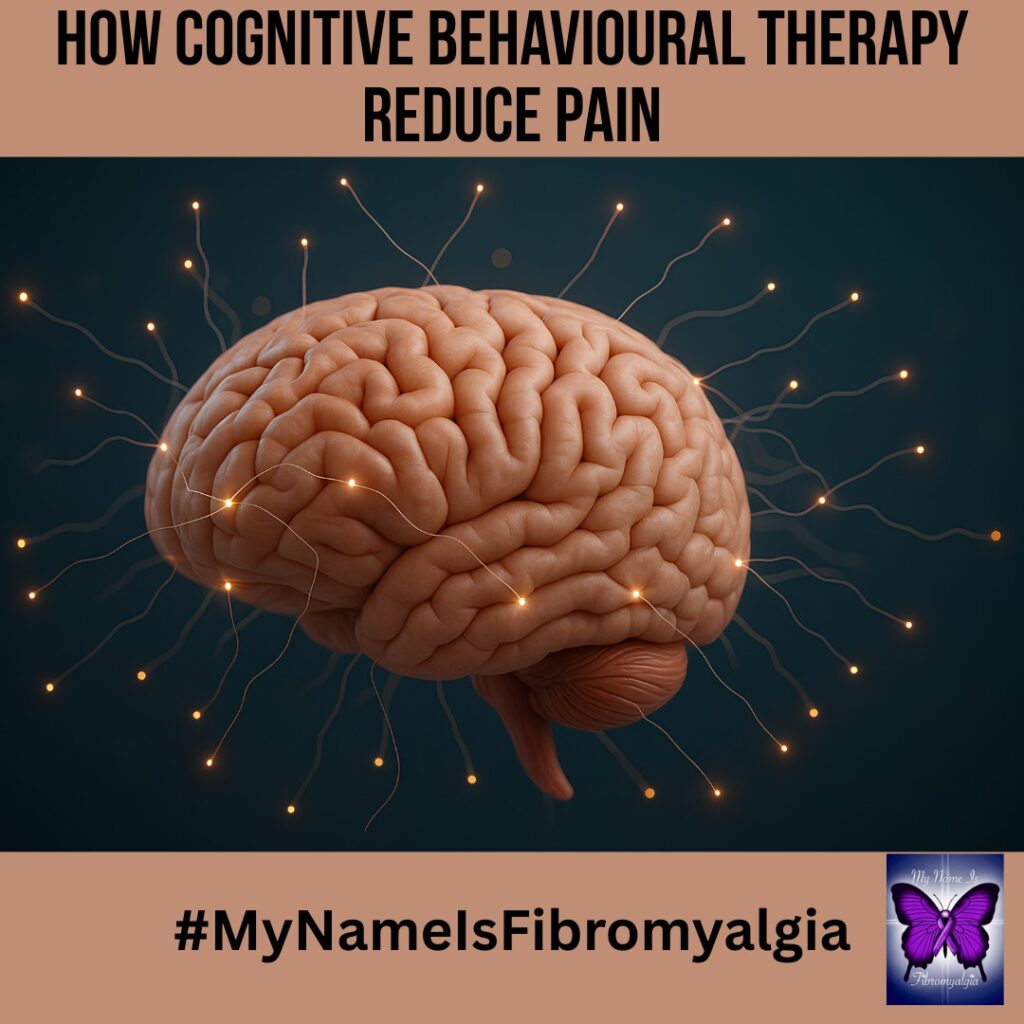
Chronic pain is no longer understood as a purely physical problem. Research now shows that pain is shaped by how the brain processes signals, how the nervous system responds to stress, and how thoughts and emotions influence bodily reactions.
Cognitive Behavioural Therapy (CBT) plays a central role in addressing these mechanisms, especially in conditions marked by pain amplification, such as fibromyalgia, chronic fatigue syndrome, irritable bowel syndrome, and other centralized pain disorders.
Rather than “treating pain as psychological,” CBT works by calming an overactive nervous system and retraining the brain’s interpretation of pain signals.
Understanding Pain Amplification
Pain amplification occurs when the nervous system becomes hypersensitive, causing normal sensations or mildly painful stimuli to feel intense or overwhelming. This process is often referred to as central sensitization.
Key features of pain amplification include:
- Heightened pain response to minor stimuli
- Persistent pain even after tissue healing
- Increased sensitivity to stress, noise, light, or fatigue
- Difficulty “turning off” pain signals
In these conditions, the brain acts less like a filter and more like a volume knob stuck on high.
The Stress–Pain Cycle
Pain amplification is closely tied to the body’s stress response system, particularly:
- The hypothalamic-pituitary-adrenal (HPA) axis
- The sympathetic nervous system (“fight or flight”)
- Stress hormones like cortisol and adrenaline
When pain is perceived as threatening, the brain triggers stress responses that:
- Increase muscle tension
- Heighten inflammation signalling
- Lower pain thresholds
- Disrupt sleep and recovery
This creates a self-reinforcing loop:
- Pain and stress equal a nervous system activation, which in turn causes more pain
CBT intervenes directly in this cycle.
How CBT Targets Pain Amplification
1. Changing the Brain’s Interpretation of Pain.
CBT helps individuals identify and modify unhelpful thought patterns that intensify pain, such as:
- Catastrophizing (“This pain will never stop”)
- Hypervigilance (“Any sensation means damage”)
- Fear-based beliefs (“Movement will make me worse”)
When pain is interpreted as dangerous, the brain amplifies it. CBT teaches patients to reinterpret pain signals as non-threatening, which reduces alarm responses in the brain.
This cognitive shift:
- Lowers activation in pain-processing brain regions
- Reduces fear-based nervous system firing
- Decreases overall pain intensity over time
2. Reducing Hypervigilance to Bodily Sensations
Many people with chronic pain become constantly focused on their symptoms. This hyper-attention increases pain perception by strengthening neural pain pathways.
CBT trains individuals to:
- Redirect attention away from constant symptom monitoring
- Normalize bodily sensations
- Reduce “body scanning” behaviours
As attention decreases, pain signals lose priority in the brain, leading to lower perceived pain intensity.
3. Regulating the Stress Response
CBT incorporates techniques that directly calm the stress system, such as:
- Controlled breathing
- Progressive muscle relaxation
- Guided imagery
- Mindfulness-based awareness
These practices shift the nervous system from sympathetic dominance (fight-or-flight) to parasympathetic activation (rest-and-digest).
Physiological effects include:
- Lower cortisol levels
- Reduced muscle tension
- Improved sleep quality
- Increased pain tolerance
Over time, the nervous system becomes less reactive, reducing pain amplification.
4. Rewiring Pain Pathways Through Behavioural Change
Avoidant behaviours like limiting movement or social activity due to fear of pain actually strengthen pain circuits in the brain.
CBT encourages:
- Gradual exposure to activity
- Pacing rather than avoidance
- Rebuilding confidence in movement
This retraining process weakens pain pathways and strengthens adaptive neural networks, a process known as neuroplasticity.
5. Improving Emotional Regulation
Emotions such as anxiety, frustration, anger, and helplessness directly increase pain sensitivity.
CBT helps individuals:
- Recognize emotional triggers
- Develop coping strategies
- Reduce emotional reactivity to pain
Better emotional regulation leads to:
- Less stress-induced pain flares
- Improved resilience during symptom spikes
- Reduced overall symptom burden
Why CBT Is Especially Effective for Centralized Pain Conditions
CBT is particularly effective for conditions where pain is driven by nervous system dysregulation rather than tissue damage, including:
- Fibromyalgia
- Chronic migraine
- Temporomandibular joint disorder (TMJ)
- Irritable bowel syndrome (IBS)
- Chronic low back pain without structural cause
In these conditions, CBT does not “convince patients pain isn’t real”; instead, it helps turn down the nervous system’s sensitivity.
Long-Term Benefits of CBT for Pain and Stress
Studies consistently show that CBT can:
- Reduce pain severity
- Improve daily functioning
- Decrease fatigue and sleep disturbances
- Lower anxiety and depression
- Improve quality of life
Importantly, CBT provides skills, not temporary relief. Patients learn tools they can continue using long after therapy ends.
Key Takeaway
CBT reduces pain amplification and stress responses by:
- Changing how the brain interprets pain
- Calming an overactive stress system
- Breaking the pain–stress feedback loop
- Retraining neural pain pathways
- Improving emotional and behavioural resilience
Rather than eliminating pain outright, CBT changes the relationship with pain, allowing the nervous system to recover balance and reducing suffering over time.
Research Studies & Clinical Evidence
Brain Mechanisms and Pain Processing
1. Neuroimaging evidence in fibromyalgia
- A randomized controlled trial found that CBT reduced pain catastrophizing and was associated with changes in functional brain connectivity in networks involved in pain processing, emotion and self-awareness, suggesting CBT alters central pain mechanisms in fibromyalgia.
2. CBT effects on neural connectivity
- Earlier research showed CBT decreased abnormal connectivity between the primary somatosensory cortex and insula regions linked with pain perception and catastrophizing, indicating changes in brain responses to pain after CBT.
3. Cortical control mechanisms
- CBT was shown to increase activation in areas associated with executive cognitive control (e.g., prefrontal cortex), supporting the idea that CBT helps the brain reinterpret and regulate pain signals.
4. CBT-induced changes in pain response
- A pilot study reported that CBT for insomnia and pain in fibromyalgia patients led to reduced neural activation in response to pain, suggesting CBT-related improvements in sensory processing.
Psychological and Physiological Mechanisms
5. UCSF Pain Management Education
- UC San Francisco outlines how CBT targets maladaptive thoughts and behaviors that perpetuate chronic pain, engages brain regions influencing pain “gating,” and reduces sympathetic nervous system (stress) responses linked to pain amplification.
6. Central sensitization reduction
- A study published on the International Association for the Study of Pain website found that CBT reduced secondary hyperalgesia (a laboratory measure of central sensitization), supporting the idea that psychological training can diminish central amplification of pain signals.
7. Mechanisms of cognitive reappraisal
- An integrative neuroscience review discusses how cognitive restructuring and reappraisal (core components of CBT) can change brain circuitry associated with fear, attention, emotion, and pain processing, linking cognitive change to reduced pain responses.
Systematic & Meta-Analytic Findings
8. Systematic review of CBT in fibromyalgia
- A Cochrane-style synthesis on fibromyalgia showed that CBT improves pain self-efficacy and reduces depressed mood and distress, though effects on pain intensity itself are mixed; nevertheless, improved coping relates to less pain interference.
Additional Scientific Background (Optional but Useful)
These background resources provide theoretical and foundational context you can cite to explain central sensitization, CBT mechanisms, and pain neuroscience:
- Institute for Chronic Pain overview explains central sensitization and how CBT concepts aim to reduce nervous system reactivity and pain amplification.
- CBT in central sensitivity syndromes describes CBT’s biopsychosocial basis and its application in centralized chronic pain conditions (e.g., fibromyalgia).
Neurobiological evidence: “Randomized trials demonstrate that CBT reduces pain-related catastrophizing and alters brain connectivity in pain networks, suggesting a direct neural mechanism for reduced pain amplification.”
Stress and nervous system regulation: “CBT reduces the stress response and sympathetic activation linked with chronic pain, leading to decreased neural amplification of pain signals.”
Central sensitization: “Experimental evidence shows CBT can reduce central sensitization, a key driver of exaggerated pain responses.”
Systematic evidence: “Systematic reviews support CBT’s role in enhancing pain coping and reducing psychological distress, even if direct pain intensity changes are modest.”
The links to our research:
https://pubmed.ncbi.nlm.nih.gov/37727908
https://pubmed.ncbi.nlm.nih.gov/27518491
https://pubmed.ncbi.nlm.nih.gov/22617632
https://pubmed.ncbi.nlm.nih.gov/34310276
https://pain.ucsf.edu/nonpharmacological-pain-management/cognitive-behavioral-therapy-cbt
https://www.iasp-pain.org/publications/relief-news/article/cbt-central-sensitization
https://www.frontiersin.org/journals/integrative-neuroscience/articles/10.3389/fnint.2018.00018/full